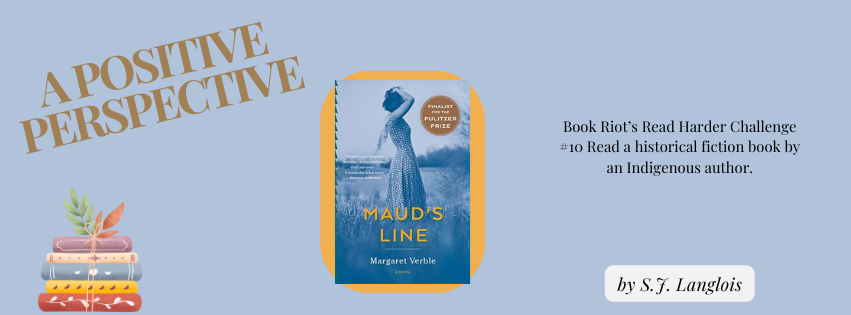
#10 Read a historical fiction book by an Indigenous author.
Historical fiction is such a fun genre. If you disagree, then you haven’t found the right book. My husband, for example, prefers historical fiction by Conn Iggulden, particularly those that deals with war strategy and the founding/ preservation of empires/ societies. I, on the other hand, will read anything I can get my grubby little hands on.
This book is more of a character-driven story. We follow our main character, Maud, who lives with her alcoholic father and her brother in a small house on their allotment. They are pretty poor, sleeping on cots on the floor and having to hide money from their father so he doesn’t waste it all on alcohol. They are surrounded by their family and are close to most of them. There is a feud between them and a neighboring family which drives a lot of conflict in the beginning of the story. Maud loves her family, but she has dreams of seeing more than just her corner of the world. One day, a peddler (think traveling salesman but with a wagon instead of a car) arrives, and Maud’s life forever changes.
Prior to reading this book, I had very little knowledge about Native American history during this time period, especially as it relates to allotments. To help put this story in context, let’s briefly go over this history.
The Dawes Act of 1887, also known as the General Allotment Act, allowed the president to divide reservation land into individual parcels. The size of these parcels were determined by the person’s standing within the tribe. The government’s stated reason for this was to help with assimilation into American culture. Keep in mind that this was first enacted only about 37 years after the Trail of Tears ended. So I think we all know the real reason for this.
Maud is a headstrong, fun-loving eighteen year old and provides a great window into life on these allotments in Eastern Oklahoma in 1928. You follow her and her family as they attempt to hold on to aspects of a culture that many are trying to take from them.
It’s a great story, and you can definitely understand how it became a finalist for the Pulitzer Prize.
Leave a Reply